
How Fix and Flip Draw Schedules Actually Work
A fix and flip draw schedule releases your rehab budget in three to six installments. The lender pays out each installment as an inspector confirms that stage of the renovation is done. This is different from handing over the full rehab amount at closing. At Simplending Financial, this is one of the most common questions real estate investors ask before their first flip. Understanding it before you close is one of the most underrated forms of project preparation. This guide breaks down how draws work, what can delay one, and how to keep a fix and flip project funded without gaps.
Key Takeaways
- Fix and flip loans typically use three to six draws, released as work is completed and inspected.
- Draws are usually reimbursements. You or your contractor pay for the work first and get funded back afterward.
- Most fix and flip lenders release a draw within three to five business days of a passed inspection.
- Liens, missed loan payments, permit issues, and incomplete documentation cause most draw delays.
- Building ten to fifteen percent contingency into your rehab budget protects your draw schedule from unexpected costs.
What Is a Fix and Flip Draw Schedule?
A draw schedule is the payment plan attached to the renovation portion of a fix and flip loan. It splits the rehab budget into stages, called draws. The lender releases each draw as work is completed and verified. Most fix and flip lenders hold the renovation budget back at closing. They pay it out incrementally instead, and they tie each disbursement to a specific phase of work.
This structure protects both sides of the deal. Lenders confirm that renovation dollars are actually going into the property before they release more capital. A fix and flip loan is secured by the property itself, not by the borrower's income or credit history alone. Investors benefit too. Interest only accrues on funds that have actually gone out, which keeps holding costs lower in the early weeks of a project.
Are Fix and Flip Draws Paid Before or After the Work Is Done?
In most fix and flip lending arrangements, a draw is a reimbursement, not an advance. The borrower or contractor pays for the work first, then requests the funds back from the lender. This detail catches the most first time investors off guard.
Because reimbursement comes after the work is done, investors need enough working capital to float the first phase of construction before the first draw clears. Investors who plan for this build a small cash cushion into their budget from day one. Skipping this step often leads to cash flow stress during a first project, with contractors waiting to get paid while a draw is still in process.
A smaller number of fix and flip lenders will release an initial draw at closing, typically to cover early costs like demolition. It is worth confirming this detail with any lender before signing.
How Many Draws Does a Fix and Flip Loan Typically Have?
Most fix and flip projects use three to six draws. The exact number depends on how extensive the renovation is. A light cosmetic rehab covering paint, flooring, and fixtures might only need two or three draws. A heavier renovation involving structural work, roofing, or a full mechanical, electrical, and plumbing overhaul usually needs more. Each major trade becomes its own inspection checkpoint.
Here is a simplified example on a fifty thousand dollar rehab budget. The first release might cover fifteen thousand dollars for demolition, framing, and structural repairs. Once roofing, windows, siding, and rough electrical and plumbing pass inspection, a second release might cover twenty thousand dollars. A third release might cover ten thousand dollars for drywall and interior finishes. A final release of five thousand dollars typically ties to punch list items once the property is ready to list.
The exact split varies by lender and by project. Even so, this milestone based structure is the norm across fix and flip lending.
Milestone Based vs Percentage Based Draws: Which Is More Common?
Milestone based draws are the more common structure in fix and flip lending. Lenders tie each one to a specific completed phase, like framing, rough ins, or finishes, rather than a percentage of total spend. Percentage based draws work differently. This less common approach ties disbursements to an overall share of the rehab budget spent, such as twenty five percent, fifty percent, seventy five percent, and one hundred percent complete.
| Draw Structure | How It's Triggered | Best Fit For |
|---|---|---|
| Milestone based | Specific phase of work completed and inspected | Sequential renovations with clear trade handoffs |
| Percentage based | Overall percent of rehab budget spent | Projects with overlapping trades or harder to isolate phases |
Neither structure is inherently better. What matters is whether it matches how the renovation will actually unfold. It also helps if the fix and flip lender is flexible enough to adjust the plan when a project does not follow a textbook sequence of trades.
How Are Fix and Flip Draws Different From Ground Up Construction Draws?
Fix and flip lenders typically process draw requests as each phase of work finishes. Ground up construction loans work differently. They usually follow a more rigid, calendar driven schedule tied to major building phases like foundation, framing, and roofing. Both structures release funds in stages, and an inspector verifies the work each time. A full ground up build follows a fixed sequence because the structure is going up from nothing. A rehab's scope can shift more easily along the way, so its draw requests follow the actual pace of the work instead of a fixed calendar.
What Is the Draw Request Process, Step by Step?
The draw request process on a fix and flip loan generally follows five steps, from completed work to funded disbursement.
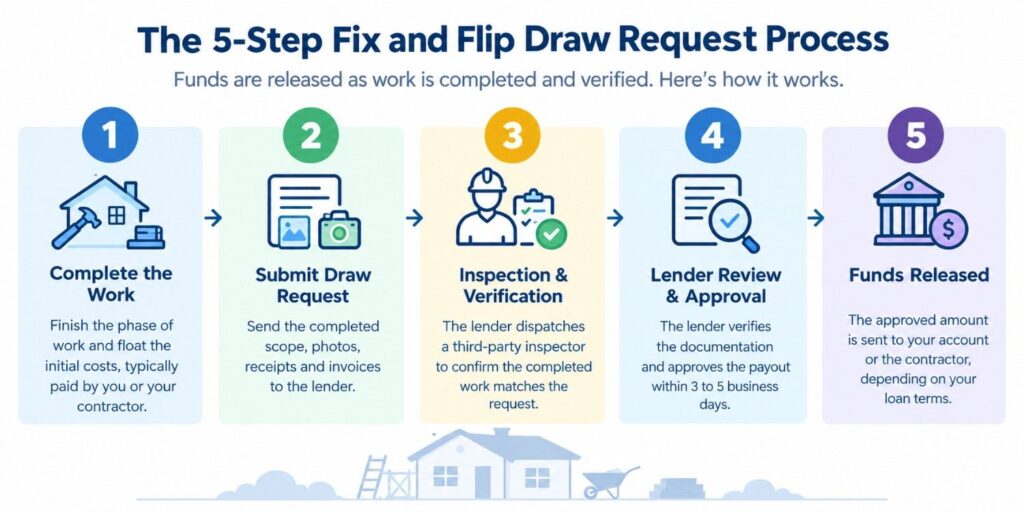
- Complete the milestone. The contractor finishes the phase of work tied to that draw. This should match the scope of work both sides agreed on at closing.
- Document the work. The borrower gathers photos, contractor invoices, and receipts for that stage. Clear, dated photos are often the fastest way for an inspector to confirm progress without a second site visit.
- Submit the draw request. This package goes to the lender along with an updated scope of work. It should show what has been completed against the original budget.
- Get an inspection. The lender sends a licensed third party to check that the work matches what was submitted. The inspector usually documents the visit in person with a fresh set of photos.
- Receive the funds. Once the inspection passes, the lender releases the draw. Most fix and flip lenders fund within three to five business days of a passed inspection. Some use technology enabled disbursements to move even faster.
Planning your own project budget? Run the numbers with the Fix and Flip Loan Calculator before you submit your first draw request, so your milestone amounts match what you can actually expect to receive.
What Can Delay or Block a Fix and Flip Draw?
Five issues account for most draw delays on fix and flip projects: scope mismatches, unresolved liens, missed loan payments, permit or code issues, and incomplete documentation.
Work that does not match the approved scope. A contractor sometimes completes work outside the original scope without a documented change order. When that happens, an inspector may not be able to verify it against the budget line items. This is one of the most common and most avoidable delays.
Unpaid or unresolved liens. A lien on the property, whether from a contractor, supplier, or another party, generally violates the loan agreement. Most lenders require any lien to clear before they release further draws.
Missed loan payments. Monthly interest payments usually need to stay current before a lender will disburse a new draw. A loan that falls behind on payments, or one nearing maturity, can pause the entire draw process.
Permit or code compliance issues. A project that falls out of compliance with local permitting requirements can see its draw timing slip. In some cases, it can also reduce the total amount a lender is willing to disburse.
Incomplete documentation. Missing invoices, unsigned lien waivers, or photos that do not clearly show completed work send more draw requests back for revision than any other single issue.
Planning ahead avoids most of these delays. None of them come as a surprise to an experienced fix and flip lender.
Why Does Contingency Budgeting Matter for Draw Schedules?
Building ten to fifteen percent contingency into a rehab budget protects the entire draw schedule from unexpected costs. Experienced investors treat this line item as non negotiable, not a nice to have. Older properties in particular tend to reveal surprises once walls come open. Outdated wiring, hidden water damage, and foundation problems rarely show up during an initial walkthrough.
Skipping contingency creates a real risk. An unexpected cost forces a mid project budget renegotiation, and that can slow down the remaining draws while the lender reviews the change. Investors who plan for contingency up front can usually absorb a surprise cost and keep the draw schedule moving without missing a beat.
How Does Draw Speed Affect Your Profit Margin?
A slow draw process can add real weeks to a fix and flip project even when the renovation work itself stays on schedule. Contractors typically get paid in stages tied to the draw schedule, so a stalled draw stalls the crew. Every extra week adds holding costs: interest, insurance, taxes, and utilities. Those costs eat directly into the eventual profit. This is why choosing fix and flip lenders with a fast, predictable draw process protects your exit margin. It is not just a convenience.
Draw discipline also connects directly to exit strategy. Some investors plan to sell once renovations wrap up. Others plan to refinance into a longer term rental loan instead. Either way, staying on schedule with draws keeps the overall project timeline, and the after repair value assumptions behind it, intact.
How Can Investors Keep Fix and Flip Draws Moving Smoothly?
Six habits separate investors who move through draws smoothly from those who repeatedly hit delays, especially first time investors running their first renovation project.
- Submit a detailed, line item scope of work at closing, since this becomes the reference point every future draw gets measured against.
- Take dated photos throughout each phase of work, not just at the end, to avoid scrambling to document a finished stage.
- Put any change to the original scope in writing, and get it approved before the work happens rather than after an inspector flags it.
- Submit draw requests a few days ahead of when funds are actually needed, since inspection scheduling is rarely instant.
- Ask any fix and flip lenders under consideration what their average draw turnaround time actually is before closing.
- Keep loan payments current throughout the project, since this is one of the simplest and most avoidable reasons a draw gets held up.
Planning a Fix and Flip Project?
A well planned draw schedule can help keep your renovation moving and reduce funding delays. Talk with Simplending Financial about your fix and flip financing needs and learn how the draw process can work for your project.
Explore Fix and Flip Loans Contact UsFrequently Asked Questions
How many draws does a fix and flip loan typically have?
Most fix and flip loans use three to six draws, depending on the size and complexity of the renovation.
Are fix and flip loan draws paid before or after the work is done?
In most cases, draws are reimbursements. The borrower or contractor pays for the work first, then requests the funds back once the lender verifies it.
How long does it take to receive a draw after an inspection?
Most fix and flip lenders release funds within three to five business days once an inspection confirms the completed work.
What documents are needed to request a draw?
A typical draw request includes an updated scope of work, contractor invoices or receipts, and clear photo documentation, plus a lender inspection.
Can unpaid liens stop a draw from being released?
Yes. Most loan agreements require the borrower to clear any liens on the property before the lender disburses additional draws.
What is the difference between a milestone based and percentage based draw schedule?
Milestone based draws release funds when a specific phase of work finishes. Percentage based draws release funds based on the overall share of the rehab budget spent.
Final Thoughts
A well structured draw schedule has an outsized impact on how smoothly a fix and flip project runs, even though it rarely gets as much attention as rate or leverage when comparing loan offers. Knowing how draws work, what can delay them, and how to prepare for each request puts an investor in a stronger position than most people starting their first flip.
If you are planning a project and want to understand how a draw schedule would work on your specific deal, the team at Simplending Financial can walk you through the process before you close, not after.
Ready to Fund Your Fix and Flip?
Get a clearer understanding of your fix and flip financing and draw process before you close. Simplending Financial can help you explore financing options for your renovation project.
Get Started With Fix and Flip Financing Contact UsHave questions about your project? Call 713-321-0201